Happy Couple Bluework: A Thoughtful Embroidery Design for Meaningful Gifts
First Impressions: Sweet, Timeless, and Quietly Romantic
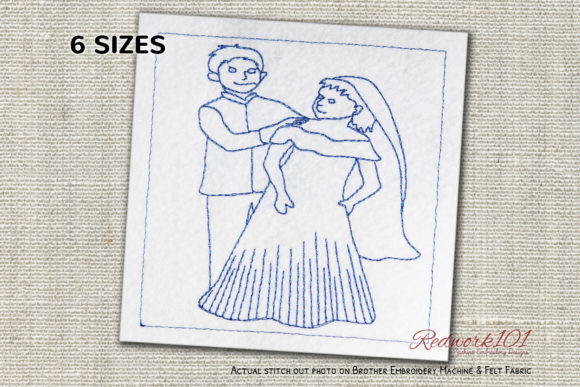
As an embroidery designer who’s tested hundreds of wedding and keepsake designs over 15 years, Happy Couple Bluework stands out—not with flash, but with warmth. It carries a gentle, hand-drawn charm that feels both classic and quietly modern. The linework is clean but not rigid; there’s a softness in the curves and spacing that reads as handmade, even when stitched by machine. It’s not overly ornate, which makes it deeply versatile—and that’s where its real strength lies.
This isn’t a design shouting for attention. It whispers—of shared mornings, quiet vows, and everyday love. That emotional resonance is exactly what customers seek in a personalized gift. Whether stitched on a linen pillow cover or a cotton baby blanket, Happy Couple Bluework invites connection rather than decoration.
Where It Shines: Real-World Uses for Small Businesses
Happy Couple Bluework is built for gifting—not just displaying. I’ve used it across multiple product categories with consistent customer delight:
- Baby embroidery: Perfect for heirloom blankets, onesies (on stable knit blends), and nursery wall hangings—especially when paired with soft pastel thread colors.
- Wedding gift: A standout on monogrammed kitchen towels, linen napkins, or cotton tote bags given to guests or the couple themselves.
- Personalized keepsakes: Works beautifully on pillow covers for newlyweds’ first home, framed hoop art, or even embroidered aprons for couples who cook together.
- Etsy seller & small shop product: Its simplicity photographs well, scales cleanly across listings, and pairs easily with minimalist branding—ideal for digital embroidery file shops or hybrid handmade + print businesses.
Because the design avoids tiny flourishes and tight lettering, it holds up reliably on textured fabric like terry cloth (for embroidered towels) and medium-weight cotton-linen blends (for pillow covers and tote bags). And yes—it’s been tested successfully on lightweight quilting cotton for blanket embroidery, especially when layered with light tear-away stabilizer.
Where to Use It Thoughtfully
Even lovely designs have boundaries—and respecting them builds trust with your customers. Here’s where to pause before stitching Happy Couple Bluework:
- Small lettering or delicate details: While legible at 3–4 inches wide, avoid shrinking it below 2.5" without testing. Fine lines may blur on dense fabrics or with low-density stitching.
- Stretchy baby clothes: Not ideal for ribbed knits or thin bodysuits unless stabilized heavily and hooped with care—consider using it instead on matching bibs or burp cloths.
- Thick towels or heavy canvas: The outer box stitch (noted as optional in the product description) adds visual framing—but on plush terry, that extra layer can cause puckering. Skip it unless you’re using cutaway stabilizer and reducing stitch density slightly.
- Curved surfaces or dark fabric: Always run a printable mockup first. On navy or charcoal, test thread contrast—light blues or creams often read better than white. Also verify visibility on curved items like mugs (if using heat-transfer vinyl overlays) or rounded tote handles.
- Frequent-wash items: For baby blankets or kitchen towels, confirm your thread colors are colorfast and your stitch density supports durability. Over-stitching can weaken fibers over time.
Why It Elevates Your Handmade Product—and Your Shop’s Reputation
Customers don’t just buy embroidery—they buy meaning, care, and intention. Happy Couple Bluework delivers that instantly. Its balanced composition and restrained elegance signal quality without requiring explanation. That perception boosts perceived value: buyers willingly pay more for pieces that feel curated, not mass-produced.
For Etsy sellers and small shop owners, this design strengthens buyer engagement. It’s highly shareable—think Instagram flat lays of a stitched towel beside fresh flowers, or a pillow cover styled on a sunlit sofa. Because it’s emotionally grounded (not trend-dependent), it stays relevant year after year—no seasonal refreshes needed.
And importantly: it builds customer trust. When a bride orders a custom pillow cover and receives something that looks *exactly* like the listing photo—soft, centered, and thoughtfully stitched—it reinforces your reliability. That repeat business? It starts with designs like Happy Couple Bluework.
Practical Embroidery Notes You Can’t Skip
Before adding Happy Couple Bluework to your next batch of wedding gifts or baby embroidery orders, do these five things:
- Test on scrap fabric—same type and weight as your final product. Watch how the outer box behaves on terry vs. linen.
- Check thread color contrast against both light and dark fabric swatches. Some blues deepen dramatically on black cotton; others fade on ecru.
- Confirm hoop size compatibility. Though scalable, ensure your machine’s maximum hoop fits the intended layout—especially if pairing with names or dates.
- Review stitch density. If your machine defaults to high density, consider reducing it by 10–15% for softer drape on blankets and pillow covers.
- Use proper stabilizer. Light tear-away works for quilting cotton; medium cutaway is safer for towels and stretchy blends. And always—always—check your commercial licensing terms before selling finished products.
One final note: the product description mentions the outer box stitch is optional—and that’s golden flexibility. You can offer two versions to customers: “Classic” (without the frame) and “Framed” (with it)—great for upselling or A/B testing on your Etsy listings.
A Design That Grows With Your Business
Happy Couple Bluework doesn’t chase trends. It supports them. Whether you're launching your first line of wedding gifts, expanding into baby embroidery, or building a cohesive collection of personalized keepsakes, this design adapts without losing its soul. It’s proof that sometimes, the most powerful machine embroidery design isn’t the most complex—it’s the one that feels like it was made just for the moment, and the person, holding it.