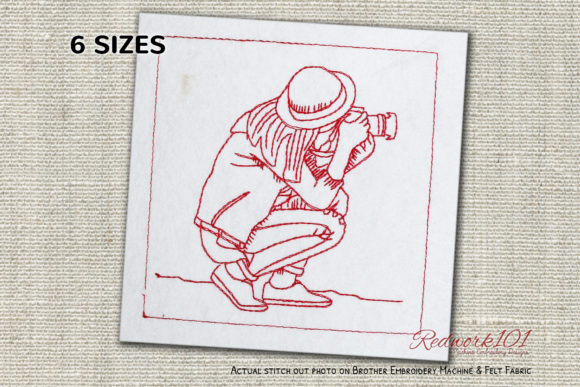
Photographer Girl Redwork Design
A Real-World Stitch Test Before the First Hoop
I pulled Photographer Girl Redwork Design into my embroidery software last week while prepping a batch of custom tote bags for a local indie bookstore’s staff gift set. The theme—creative, approachable, quietly confident—fit perfectly. But before I sent it to the machine, I paused. Not to admire the line work or check file integrity, but to ask: *Will this hold up when stitched on 12-oz canvas, under real wear, with real expectations?* That’s how I treat every design I consider for client work, small shop merchandise, or Etsy listings—and Photographer Girl Redwork Design deserves that same level of practical scrutiny.
First Impression: Clean, Characterful, and Quietly Confident
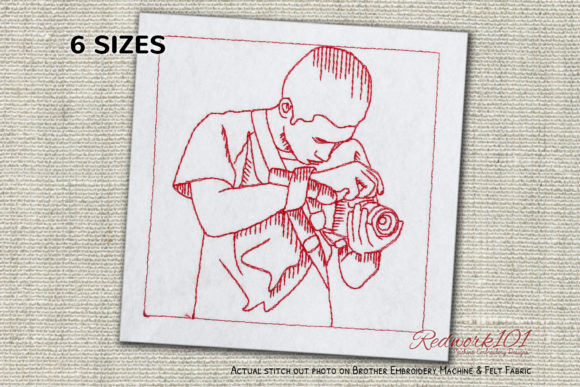
The design reads instantly: a stylized girl holding a vintage-style camera, rendered in classic redwork tradition—minimal color, bold outlines, intentional negative space. There’s no clutter, no overworked detail. Just strong silhouette, balanced proportions, and a gentle tilt to the head that reads as curious, not cutesy. It doesn’t shout. It invites. That makes it unusually versatile: equally at home on a baby onesie (as a subtle nursery nod) or an apron for a photography workshop instructor. The optional box stitch around the perimeter? A thoughtful touch—not part of the core image, so you can skip it cleanly if your fabric or brand aesthetic calls for something softer.
Where It Shines—And Where It Asks for Care
Photographer Girl Redwork Design performs beautifully on medium-weight woven fabrics: cotton twill for tote bags, brushed cotton for sweatshirts, linen-cotton blends for pillow covers and tea towels. On a structured tote, the clean lines pop without competing with texture. On a relaxed-fit crewneck, it lands with quiet professionalism—ideal for creatives who want embroidered identity without logo overload.
It also works well as an embroidered patch—especially when backed with lightweight fusible webbing and finished with a satin-stitched edge. I tested it on a denim jacket sleeve (medium hoop, tear-away + cutaway stabilizer combo), and the running-stitch outlines stayed crisp, with no thread nesting or puckering.
But here’s where attention matters: avoid using it on highly textured or loosely knit fabrics like bouclé, slubbed linen, or ribbed knits without extra stabilization. The design relies on clear line definition—so on stretchy t-shirt knits, use a firm cutaway stabilizer and reduce top tension slightly to preserve shape. And on dark fabrics? Stick with high-contrast thread (like classic redwork red on navy or charcoal) or test black-on-black only if your audience values subtlety over readability.
Small Hoop? Think Twice—Then Plan Ahead
This isn’t a tiny pocket-sized motif. It carries visual weight. If you’re working with a 4x4 hoop, confirm the design fits comfortably *with seam allowance and stabilizer margin*—don’t push the edges. On curved surfaces like caps or beanies, reposition the design toward the front panel’s flatter zone, and consider simplifying or omitting the optional outer box if space feels tight. Small lettering isn’t present here, which is a relief—no risk of illegibility at reduced scale.
What It Adds to Your Finished Product—Beyond the Stitch
When stitched well, Photographer Girl Redwork Design elevates perceived value. It reads handmade, intentional, and design-aware—not generic clip art. Customers notice that. For Etsy sellers, that translates to stronger buyer engagement: more saves, longer dwell time, better conversion on personalized gifts like baby embroidery sets or holiday-themed kitchen towels.
For craft businesses building a cohesive boutique line, it supports brand consistency—especially paired with minimalist typography or complementary redwork motifs (a film reel, a tripod, a light meter). It’s also gift-ready: warm but not saccharine, gender-neutral in spirit, and meaningful without being literal. A new photographer receiving a sweatshirt with this design stitched on the chest doesn’t just get apparel—they get recognition.
Practical Designer Notes—From My Hoop to Yours
- Always test first—on scrap fabric matching your final product’s weight and weave. Note how fill stitches settle and whether outlines stay sharp after washing.
- Review stitch density—redwork tends to be lighter than dense fill designs, but confirm there are no unexpectedly heavy satin-stitch areas that could stiffen delicate fabrics.
- Check thread color contrast on both light and dark backgrounds. Redwork traditionally uses red thread, but soft rust, brick, or even deep plum can expand its range.
- Confirm hoop size compatibility before digitizing or resizing—especially if layering with text or secondary motifs.
- Inspect corners and curves in your embroidery software. Does the camera strap taper cleanly? Does the hairline flow without jagged vector breaks?
- Test in black-and-white mockups—this design’s strength is in its line work, so grayscale previews reveal clarity issues faster than color.
- Use appropriate stabilizer: medium cutaway for knits, tear-away for stable wovens, and a light film-type for sheer fabrics like voile (if used on baby items).
- Verify licensing before selling finished products or bundling the digital embroidery file. Commercial use rights matter—for Etsy sellers, craft fairs, and wholesale partnerships.
Final Thought: A Design That Serves the Maker—and the Wearer
Photographer Girl Redwork Design isn’t flashy. It doesn’t try to be everything. Instead, it does one thing exceptionally well: it gives voice to a creative identity—calm, capable, and authentically crafted. Whether you’re stitching it onto a holiday gift for a shutterbug friend, branding a small shop’s limited-run apparel, or adding quiet charm to a nursery pillow cover, it carries intention. And in embroidery—where time, thread, and trust are all finite resources—that kind of reliability isn’t just nice. It’s essential.