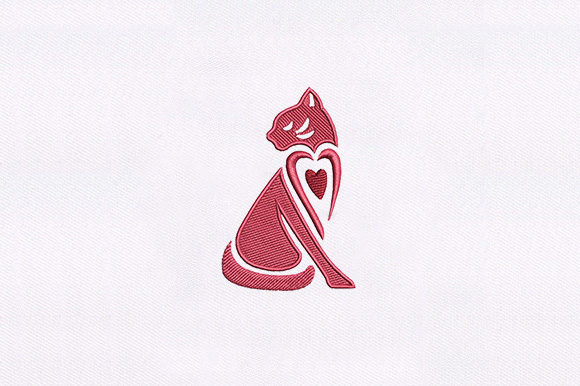
Pink Lovely Cat
First Impression: Soft, Stylish, and Instantly Approachable
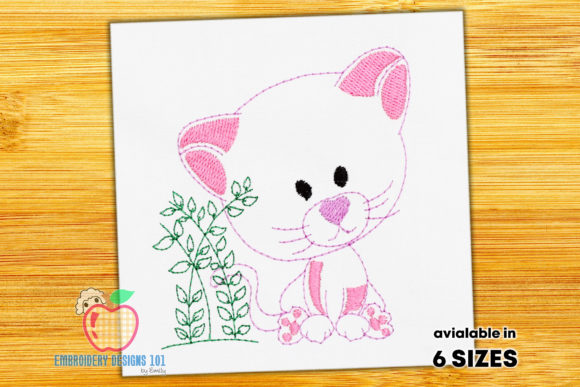
As an embroidery designer who’s prepped over 200 craft fair booths—from Portland pop-ups to Nashville maker markets—I opened Pink Lovely Cat expecting charm. What I got was something sharper: a design that balances sweetness with quiet confidence. It doesn’t scream “cute.” It *whispers* elegance—soft pink tones, clean line work, and a gentle feline silhouette that reads as modern, not juvenile. This isn’t a cartoon cat or a kawaii overload. It’s refined enough for a boutique apron, warm enough for a handmade tea towel, and distinctive enough to stand out in a sea of florals and script fonts at a weekend market.
Where Pink Lovely Cat Shines on Craft Fair Products
Tote bags: A natural home. Positioned just below the handle seam or centered on the front panel, Pink Lovely Cat adds personality without overwhelming. Its scale works beautifully at 3.5–4 inches wide—large enough to catch the eye from three feet away, small enough to leave room for branding or complementary stitching.
Aprons and tea towel embroidery: Here’s where its softness becomes strategic. On linen-look aprons or unbleached cotton tea towels, Pink Lovely Cat feels intentional—not tacked on. It elevates the handmade product without competing with texture. Avoid dense weaves or heavy terry; stick to medium-weight cotton, canvas, or linen blends for crisp stitch definition.
Embroidered patches and fabric pouches: Excellent candidate for iron-on or sew-on patches. At 2–2.5 inches, it retains clarity and readibility—even when viewed quickly by a customer flipping through a patch display. On drawstring pouches or zippered cosmetic cases, it anchors the design with warmth and cohesion.
Caps and pillow covers: Use caution. The curved surface of a cap crown can distort fine curves in the cat’s face or ears—test first on scrap fabric with your exact cap style. For pillow covers, center it on a 16” or 18” square for balanced visual weight. Avoid placing near seams where tension may pull stitches.
Market bags and giftable handmade items: Pink Lovely Cat performs especially well on reusable cotton market bags—especially those with light or off-white bases. It reads as thoughtful, not trendy, which aligns with buyers seeking sustainable, beautiful utility.
What Makes Pink Lovely Cat a Smart Craft Fair Investment
- Instant recognition: No decoding needed. Customers grasp the subject, mood, and quality in under two seconds—critical when booth traffic moves fast.
- Photogenic consistency: It photographs cleanly across fabric types and lighting. That means strong Etsy listings, printable mockups that convert, and Instagram posts that don’t require heavy editing.
- Batch-friendly execution: Moderate stitch density (no excessive fill layers or micro-detailing) means faster run times, less thread breakage, and reliable repeatability across 20+ tote bags or 50+ patches.
- Brand-flexible: Whether your shop leans minimalist, cottagecore, or modern feminine, Pink Lovely Cat adapts. Pair it with neutral thread (rose quartz, heather blush, or soft dove gray) to match your palette—or go bold with metallic rose gold for premium positioning.
Careful-Use Notes Every Embroidery Designer Should Check
Before cutting fabric or loading hoops: inspect the machine embroidery design closely. Look for:
- Dense satin-stitched areas around the cat’s ears or nose—these can pucker on lightweight fabrics or textured tea towels.
- Any tiny interior details (e.g., whiskers, pupil definition) that may vanish below 2 inches or blur on dark fabric. If present, consider simplifying or omitting them for small-scale applications like patches or caps.
- Stitch direction in curved elements—ensure smooth flow around facial contours to avoid “stair-stepping” on curved surfaces.
- Thread color recommendations—if none are listed, test contrast on your top 3 fabric colors. Pink thread on black fabric? Gorgeous—but only if the embroidery file includes sufficient underlay.
Design Assets That Strengthen Your Small Shop Product Line
Pink Lovely Cat isn’t just a single motif—it’s a versatile design asset. Use it across categories to build cohesion: pair it with simple monogram initials on tea towels, repeat it subtly along the hem of an apron, or scale it down as a corner accent on gift tags. As an Etsy seller or digital embroidery file creator, bundling Pink Lovely Cat with coordinating floral sprigs or minimalist paw prints creates higher-value listings—and encourages cart upsells.
Real-World Embroidery Designer Checklist Before Booth Day
- Test the machine embroidery design on scrap fabric matching your final product’s weight and weave.
- Confirm hoop size compatibility—does it fit comfortably in your standard 4x4 or 5x7 hoop? Larger versions may require re-hooping, slowing production.
- Review stabilizer needs: lightweight cutaway for knits, tear-away for stable wovens, and fusible + tear-away for tea towels with nap.
- Create at least one finished product mockup—not digital, not printed, but stitched, pressed, and displayed as it will appear on your table.
- Compare how Pink Lovely Cat looks on light vs. mid-tone fabrics. Does it retain charm on oatmeal canvas? Does it pop on blush linen? Document both.
- Verify commercial licensing terms. Even if labeled “for personal use,” many sellers overlook that embroidering and selling a finished product falls under commercial embroidery guidelines.
Final Thought: A Quiet Standout in a Busy Market
In a craft fair landscape crowded with bold typography, maximalist florals, and novelty motifs, Pink Lovely Cat offers something rare: restrained appeal with emotional resonance. It invites touch, supports storytelling (“My grandma loved pink cats”), and quietly signals craftsmanship. It won’t shout—but it will linger in memory. For the Etsy seller refreshing their spring collection, the boutique maker curating a soft-launch capsule, or the embroidery business owner building a signature line of handmade product assets, Pink Lovely Cat earns its place—not as filler, but as a foundational piece.