Rabbit with Butterflies Redwork
First Impression: Soft Whimsy with Handmade Charm
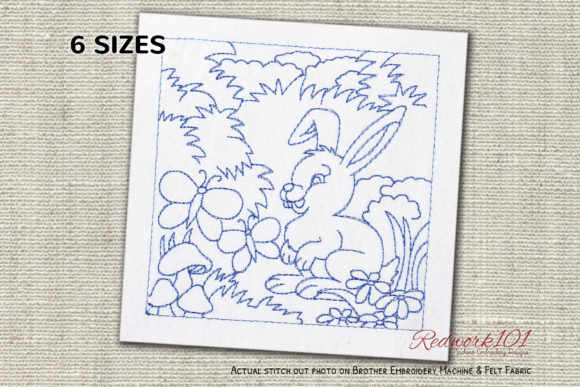
Rabbit with Butterflies Redwork lands as gentle, nostalgic, and quietly confident—not loud or trendy, but deeply resonant with buyers who value soft storytelling in stitch. It reads as cottagecore-adjacent with a redwork foundation that signals authenticity and time-honored technique. For craft fair shoppers scanning your booth at 10 a.m. on a Saturday, this design doesn’t shout—but it *holds gaze*. It feels like a quiet invitation: “This is made with care, for someone who notices small things.” That’s gold for baby animals-themed embroidery, especially when positioned alongside modern-minimal or overly saturated competitors.
Where Rabbit with Butterflies Redwork Shines In-Person
At a crowded handmade market, Rabbit with Butterflies Redwork performs strongest on products where scale, texture, and context align:
- Tote bags: Centered on natural canvas or unbleached cotton, it reads clearly from 6 feet away—soft enough to feel approachable, detailed enough to reward closer looking. Avoid ultra-heavy duck canvas unless you reinforce stabilizer; the delicate butterfly wings need clean stitch definition.
- Tea towels: A top-tier placement. Linen-cotton blends let the redwork pop without glare, and the rabbit’s rounded shape balances the vertical flow of a hanging towel. Customers consistently pause here—especially parents and gift buyers looking for kitchen charm with personality.
- Embroidered patches: Highly effective at 3–4 inches wide. The clean lines of redwork translate beautifully to iron-on or sew-on formats. Skip the optional box stitch unless using it intentionally as a border accent—otherwise, it competes with the rabbit’s silhouette.
- Pillow covers & small pouches: Works elegantly at 4–5 inches tall. The composition naturally centers itself, making alignment fast during batch production. No repositioning headaches—just hoop, stitch, and move on.
Where It Needs Thoughtful Execution
Rabbit with Butterflies Redwork isn’t universally forgiving—and that’s okay. As an embroidery designer prepping for a weekend booth, I treat it like a trusted collaborator with clear boundaries:
- Caps & curved surfaces: Avoid placing it across the crown or bill curve unless you’ve tested on scrap with proper cap hoops and lightweight cutaway stabilizer. Tiny butterfly antennae and fine rabbit ear outlines can distort or vanish on tight curves.
- Dark fabric: Traditional redwork relies on contrast. On navy, charcoal, or black linen, the design loses its warmth unless stitched in cream, ecru, or pale pink thread. Always test thread colors against your base fabric—not your screen.
- Textured towels (waffle, terry, heavy jacquard): High stitch density near the rabbit’s face or butterfly bodies may pucker or sink. Reduce density where possible—or reserve this design for smoother weaves like balanced twill or medium-weight cotton sateen.
- Small-scale applications (e.g., keychain tags or mini pins): Below 2 inches wide, detail blurs. The butterflies become smudges; the rabbit’s expression flattens. Use it as a focal—not an accent—at tiny sizes.
Online Appeal & Digital Workflow Reality
For Etsy sellers and digital embroidery file shops, Rabbit with Butterflies Redwork photographs exceptionally well—especially flat-laid on neutral backdrops with soft natural light. Its balanced negative space gives mockup designers room to breathe, and the redwork aesthetic reads instantly as “handmade,” not mass-produced. When paired with printable mockups showing tea towels, totes, and patches, it converts well because buyers intuitively understand how it’ll live in their homes or wardrobes.
That said: don’t assume clarity carries across all devices. Zoom in on your listing thumbnails—do the butterflies read as distinct shapes? Does the rabbit’s outline stay crisp at 200px width? If not, simplify or adjust spacing before uploading your embroidery file. This isn’t just about aesthetics—it’s about reducing buyer hesitation and post-purchase questions.
Production Practicality for Small Shop Owners
Rabbit with Butterflies Redwork is batch-friendly. Its moderate stitch count (no dense fills or micro-stippling), consistent line weight, and symmetrical balance make hooping repeatable and timing predictable. You can run 12–15 tea towel embroideries in a morning without recalibrating. Just remember: the optional box stitch is truly optional—and often best skipped unless it serves your brand’s visual rhythm (e.g., matching a series of framed redwork samplers).
For commercial embroidery, confirm licensing terms before applying Rabbit with Butterflies Redwork to resale items. Some redwork collections restrict use on mass-produced apparel—always verify before stitching 50+ tote bags for wholesale.
Booth Strategy & Buyer Engagement
In my own craft fair setup, I anchor Rabbit with Butterflies Redwork on three hero pieces: a folded tea towel draped over a ceramic mug, a patch pinned to a denim apron strap, and a pillow cover propped beside a small wildflower bouquet. This creates a cohesive micro-narrative—“home,” “hands,” and “gentle joy.” Shoppers linger longer, ask about thread origin or fabric sourcing, and often buy two items instead of one.
It also pairs seamlessly with other baby animals-themed embroidery—think coordinating fox or fawn motifs—but never competes. Rabbit with Butterflies Redwork holds its own tonal space: tender, unhurried, and quietly premium.
Designer Notes Before You Stitch
Before cutting fabric or loading your machine embroidery design:
- Test Rabbit with Butterflies Redwork on scrap fabric matching your final product’s weight and weave.
- Check thread contrast under both daylight and indoor lighting—redwork fades fast in low-CRI bulbs.
- Review spacing between rabbit and butterflies—tight crowding kills airiness; too much distance weakens cohesion.
- Confirm hoop size compatibility—especially if adding the optional box stitch, which expands outer dimensions.
- Inspect stitch density in high-detail zones (butterfly wings, rabbit’s eye) and adjust if needed for your fabric texture.
- Use appropriate stabilizer: lightweight cutaway for knits, tear-away for stable wovens, and adhesive + cutaway for slippery silks or linens.
- Create at least one real mockup—not just digital. See how light hits the stitches in person.
- Compare fabric colors side-by-side: oatmeal vs. ivory vs. natural undyed cotton yield very different redwork moods.
- Verify commercial licensing status—especially if selling finished products through boutiques or online marketplaces.