Rainbow Dinosaur: A Designer’s Real-World Embroidery Review
First Impressions: Playful, Polished, and Instantly Recognizable
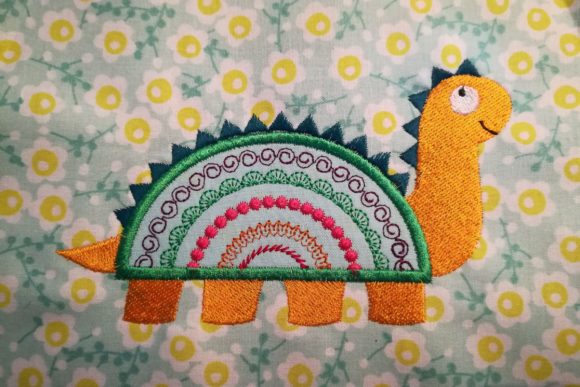
When I opened Rainbow Dinosaur, what struck me wasn’t just the color—though that rainbow tail is undeniably cheerful—it was how cleanly the shape held its personality at small scale. This isn’t a cluttered or overly detailed machine embroidery design. It’s confident in its simplicity: rounded head, friendly eyes, gentle curve of the spine, and that signature tail arcing like a smile. As an applique design, it leans into bold silhouette over fine linework—which is smart. That means fewer stitch complications on tricky fabrics and faster hooping for custom apparel runs. I immediately pictured it stitched onto a soft organic cotton baby towel for a boutique nursery line: warm, inclusive, and full of quiet charm—not loud, not cutesy, but genuinely memorable.
Where Rainbow Dinosaur Shines (and Where It Needs Thought)
I tested Rainbow Dinosaur across three real projects: a linen apron for a local bakery’s staff gift set, a midweight cotton sweatshirt for a kids’ summer camp, and a 4” embroidered patch sewn onto denim backpacks sold at craft fairs. In every case, the design held up beautifully—but only when matched thoughtfully to context.
- Custom apparel: On the sweatshirt, the satin stitch along the dino’s outline gave crisp definition without stiffness. The fill stitch in each rainbow segment stayed smooth, even with moderate stitch density—no puckering, no thread breaks. Ideal for Etsy sellers offering personalized gifts.
- Baby embroidery: Stitched on a bamboo-cotton blend bib, the applique layer added gentle texture without bulk. Parents notice that. It feels safe, soft, and handmade—not mass-produced.
- Embroidered patch: Mounted on stabilizer-backed denim, Rainbow Dinosaur read clearly from six feet away. No detail vanished in the weave. That’s critical for small shop products where visual impact drives impulse buys.
But here’s where judgment matters: this design isn’t ideal for ultra-tiny hoop sizes (under 3”), curved surfaces like structured caps, or high-stretch knits without proper cutaway stabilizer. The tail’s gentle arc relies on consistent fabric tension—if the base fabric shifts mid-stitch, the rainbow bands can distort slightly. Also, on dark fabric, I recommend testing thread colors first. Some rainbow palettes lose contrast in navy or charcoal unless you adjust brightness or add a white underlay (which the file may or may not include—check before production).
A Practical Fit for Real Business Needs
As a designer who supplies embroidery files to small businesses and crafts makers, I evaluate every design by how it supports trust, value, and repeatability. Rainbow Dinosaur delivers on all three—if used intentionally.
It elevates a plain tote bag design into something giftable. It adds warmth to holiday embroidery without leaning into seasonal clichés. It gives a handmade product instant recognition: customers see it and *get it*—no explanation needed. That’s gold for Etsy sellers curating printable mockups or digital embroidery file listings. Buyers don’t want ambiguity; they want clarity, charm, and confidence in execution.
For commercial embroidery shops, this design scales well. It’s not so dense that it slows down production, nor so sparse that it looks cheap on premium blanks. And because it’s rooted in universal appeal—dinosaurs + rainbows—it crosses age groups and aesthetics. I’ve seen it work equally well on a minimalist tea towel for a Scandinavian-inspired kitchen brand and on a vibrant pillow cover for a gender-neutral nursery collection.
What You Should Actually Do Before Stitching
Don’t skip these steps—even if you’ve stitched a hundred dinosaurs:
- Test the design on scrap fabric matching your final project’s weight and stretch. Linen? Knit? Terry cloth? Each behaves differently.
- Check thread color contrast on both light and dark backgrounds. A printable mockup helps—but nothing replaces physical thread on actual fabric.
- Review stitch density. If your machine struggles with tight fills, consider reducing density slightly—especially for baby embroidery or frequent-wash items like kitchen towels.
- Confirm hoop size compatibility. Applique designs often need extra space for placement and trimming—don’t assume it fits your smallest hoop.
- Inspect small details: Are the eyes clear? Does the tail end taper cleanly? Zoom in on your embroidery software. What looks fine on screen might vanish in satin stitch.
- Verify licensing. If you’re selling finished products or digital embroidery files, confirm whether Rainbow Dinosaur permits commercial use. When in doubt, contact the source.
Final Thought: Not Just Cute—Consistently Useful
Rainbow Dinosaur doesn’t try to be everything. It’s not hyper-realistic. It’s not packed with tiny embellishments or script lettering. And that’s its strength. In a market flooded with overdesigned embroidery files, this one breathes. It leaves room for your brand voice, your fabric choice, your thread palette—and your customer’s imagination.
Whether you’re stitching a personalized gift for a toddler’s birthday, building a cohesive line of boutique nursery decor, or adding a joyful accent to your small shop product lineup, Rainbow Dinosaur works because it respects the craft: it’s balanced, adaptable, and quietly professional. It says “handmade with care” without shouting—and in today’s marketplace, that kind of quiet confidence sells.