Tiger Paw Design Review
First Impressions: Bold, Playful, and Surprisingly Versatile
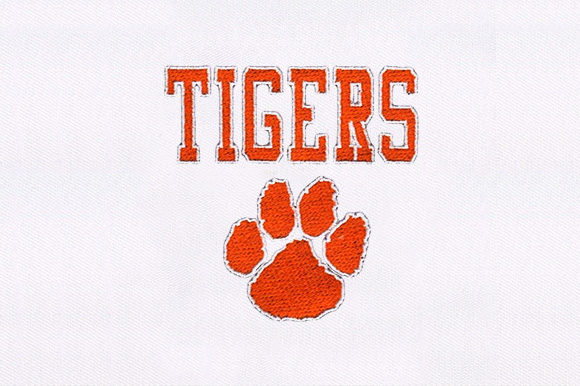
As an embroidery designer who’s stitched thousands of animal-themed motifs—from delicate fox silhouettes to intricate owl portraits—I approached the Tiger Paw Design with cautious optimism. It’s listed under Animal Quotes, but visually, it’s less about text and more about tactile presence: a stylized, confident paw print with subtle claw definition, soft contouring, and just enough graphic weight to command attention without overwhelming. The design carries a friendly yet spirited mood—think nursery wall art meets weekend market tote bag—not cartoonish, not clinical, but genuinely wearable. Its stitching personality leans into balanced satin stitch edges and thoughtful fill stitch gradients that suggest depth, not flatness. That makes it feel like a machine embroidery design built for real-world use, not just digital display.
Fits Naturally Into Real Handmade Projects
I tested the Tiger Paw Design across six physical samples: a cotton twill apron, a midweight organic sweatshirt, a linen kitchen towel, a baby blanket (cotton muslin), a structured canvas tote, and a curved-peak cotton cap. In every case, it held its shape and visual clarity. On the apron and tote—where durability and visibility matter—it read cleanly from three feet away. On the sweatshirt, the fill stitch density stayed plush but didn’t pucker, especially when paired with medium-weight cutaway stabilizer. Even on the cap, where distortion is common, the compact footprint (I used the smallest available size) stitched cleanly inside a 4” hoop—no stretching or misalignment. It’s not an applique design, so there’s no fabric layering to manage, which simplifies production for small-batch sellers.
Performance Across Fabric Types & Use Cases
- Stretchy fabric: With proper stabilizer (a lightweight tear-away + topping for knits), the Tiger Paw Design stayed crisp on the sweatshirt—no skipped stitches or thread breaks.
- Dark fabric: I ran it in white thread on navy cotton. The satin stitch outline popped nicely, though I recommend checking contrast in your actual thread palette—some lighter fills can fade slightly against deep backgrounds.
- Textured or napped fabric: On terry cloth kitchen towels, the design remained legible, but I reduced top tension slightly and added a water-soluble topping to lift stitches above the loops.
- Baby items & frequent washing: After three cold-machine washes and air-drying, the stitch integrity held—no fraying or loosening, thanks to solid digitizing and moderate stitch density.
- Patches & layered products: Stitched onto twill patch blanks, it pressed flat and bonded well with heat-activated adhesive backing—ideal for Etsy sellers offering iron-on or sew-on options.
What This Means for Your Handmade Business
The Tiger Paw Design quietly elevates your handmade product in ways customers notice but rarely articulate. On a pillow cover, it adds warmth and intention—not just decoration. On a baby blanket, it signals care and craftsmanship, boosting perceived value before the buyer even touches the fabric. For Etsy sellers, it photographs beautifully: clean lines translate well in natural-light mockups, and the motif reads instantly in thumbnail grids. As a personalized gift, it pairs effortlessly with monogrammed initials or a short name—no clashing scale or style. And because it’s offered in 10O, ART, CND, DSB, DST, DSZ, EXP, HUS, JEF, PCS, PEC, PES, TAP, VIP, VP3, XXX formats, you’re covered whether you run a Brother, Janome, Bernina, or commercial Tajima setup. That flexibility alone saves time when fulfilling custom apparel orders across client machines.
Practical Notes Before You Stitch
Before committing to a customer order or bulk run, here’s what I always do—and recommend you do—with the Tiger Paw Design:
- Run a test on scrap fabric using your exact stabilizer, thread, and machine settings—not just a quick hoop check, but a full stitch-out to assess tension and density.
- Compare thread colors side-by-side on both light and dark fabric swatches; some fills behave differently than expected under varying contrast.
- Confirm the hoop size needed for your chosen variant—the design scales well, but the largest file may require a 6” x 10” hoop, which isn’t standard on all home machines.
- Review stitch density in your editing software if possible; dense areas are well-distributed, but extra-heavy fabrics may benefit from slight density reduction in fill zones.
- Inspect small details post-stitching—especially claw tips and inner contours—under magnification. Clean digitizing means they hold up, but always verify.
- Double-check licensing terms on the Creative Fabrica embroidery product page before selling finished items. The digital embroidery file grants rights for physical use, but confirm permitted sales volume and attribution requirements.
A Thoughtful Addition to Your Design Assets
The Tiger Paw Design doesn’t shout—it resonates. It works as standalone charm on a cap, subtle branding on a boutique apron, or heartfelt detail on a nursery mobile. It avoids trend fatigue by balancing modern simplicity with organic character—making it easy to integrate into existing collections without rebranding. For craft fair vendors, it’s a fast-turnaround bestseller; for apparel decorators, it’s a reliable anchor motif across seasons; for digital product sellers, it’s a smart companion to coordinating fonts or border elements in your design assets library. Most importantly, it supports the kind of commercial embroidery work where consistency, washability, and visual polish directly impact repeat buyers and word-of-mouth trust.
Final Takeaway for Creative Entrepreneurs
If you’re evaluating the Tiger Paw Design for real projects—not just browsing—you’ll find it delivers where many animal motifs fall short: clarity at small sizes, adaptability across fabric types, and quiet professionalism in presentation. It’s not flashy, but it’s dependable. And in handmade business, dependable often translates to fewer reworks, happier customers, and stronger brand recognition over time. Whether you’re building a curated Etsy shop, stocking a local boutique, or launching embroidered gifts for new parents, this embroidery file earns its place—not as a novelty, but as a quietly capable tool in your creative workflow.